

How can we build a shared agenda for our future, and build the political power to make it real?
Democracy is too often practiced individually, a transaction in a voting booth in pursuit of our individual interests. How do we move from individual to collective interests – and build the political power to make our vision real?
At For The Many, we believe policy agendas built by the public are one of the most powerful levers for serious policy change. Our approach to community agendas was tested in Chicago, in a voter guide built by over 2,000 residents.

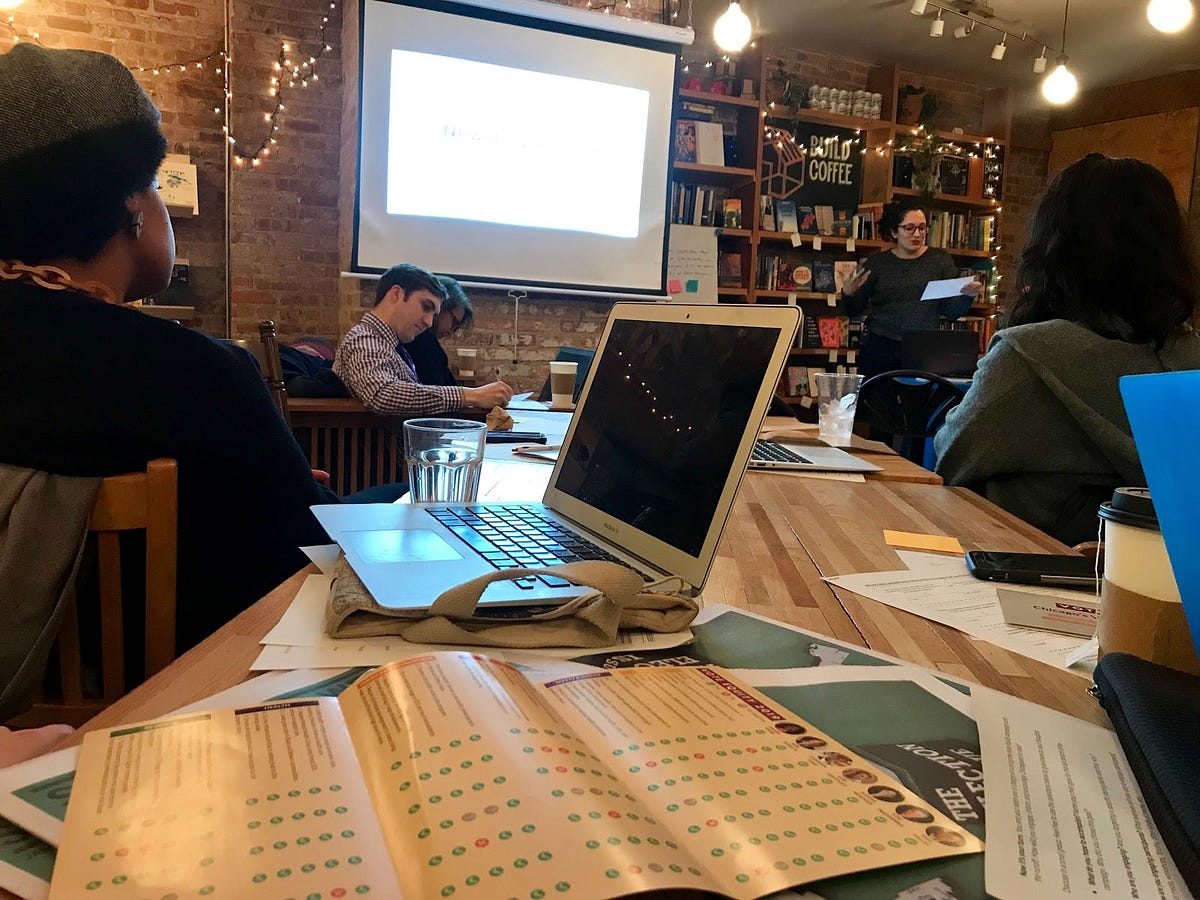
The Vote Equity Project started with 10 community voting parties held at public libraries, inviting residents to come vote on the issues they wanted political candidates to prioritize in the upcoming election.
At these parties, residents reviewed policy ideas submitted by local residents, policymakers, and civic organizations. Before voting, they shared their perspectives with each other. How would these policy ideas matter in their lives?
Community voting, the process of neighbors sharing their lives with each other before voting for their priorities, is core to why this works.
Every part of this process – the ballots, the community meet-ups, the facilitation – was designed around the belief that when neighbors recognize each other's struggles, we grow our resolve to build a world big enough for all of us to thrive.
After the first set of voters saw community voting in action, neighbors took the voting process back to places their community already meets. Across churches, schools, tech incubators, and community service days, the month-long process engaged over 2,000 residents, who collectively cast over 52,000 votes on the issues they cared about most.
The resulting agenda, and corresponding voter guide, were answered by candidates for all offices and received extensive press coverage.
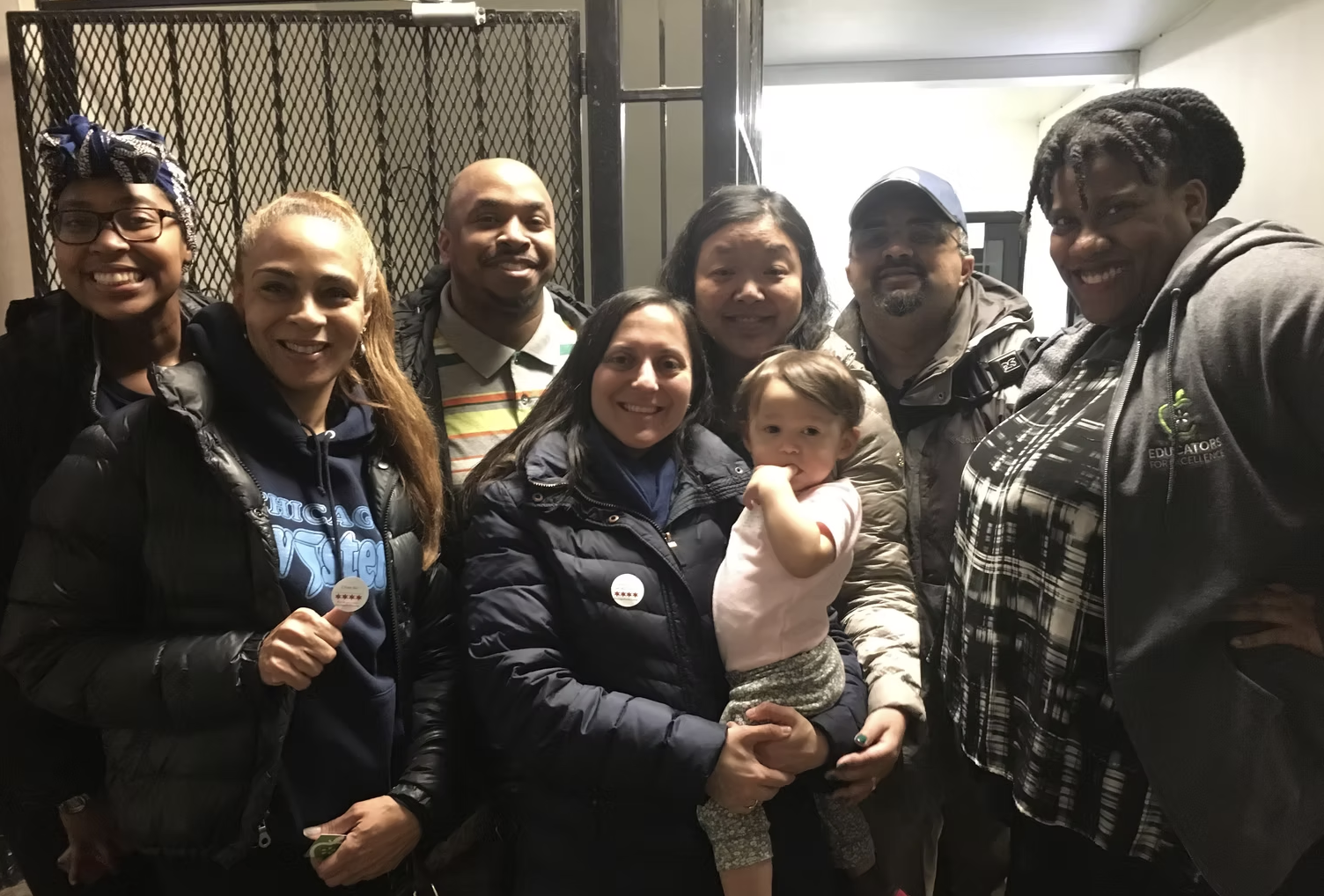

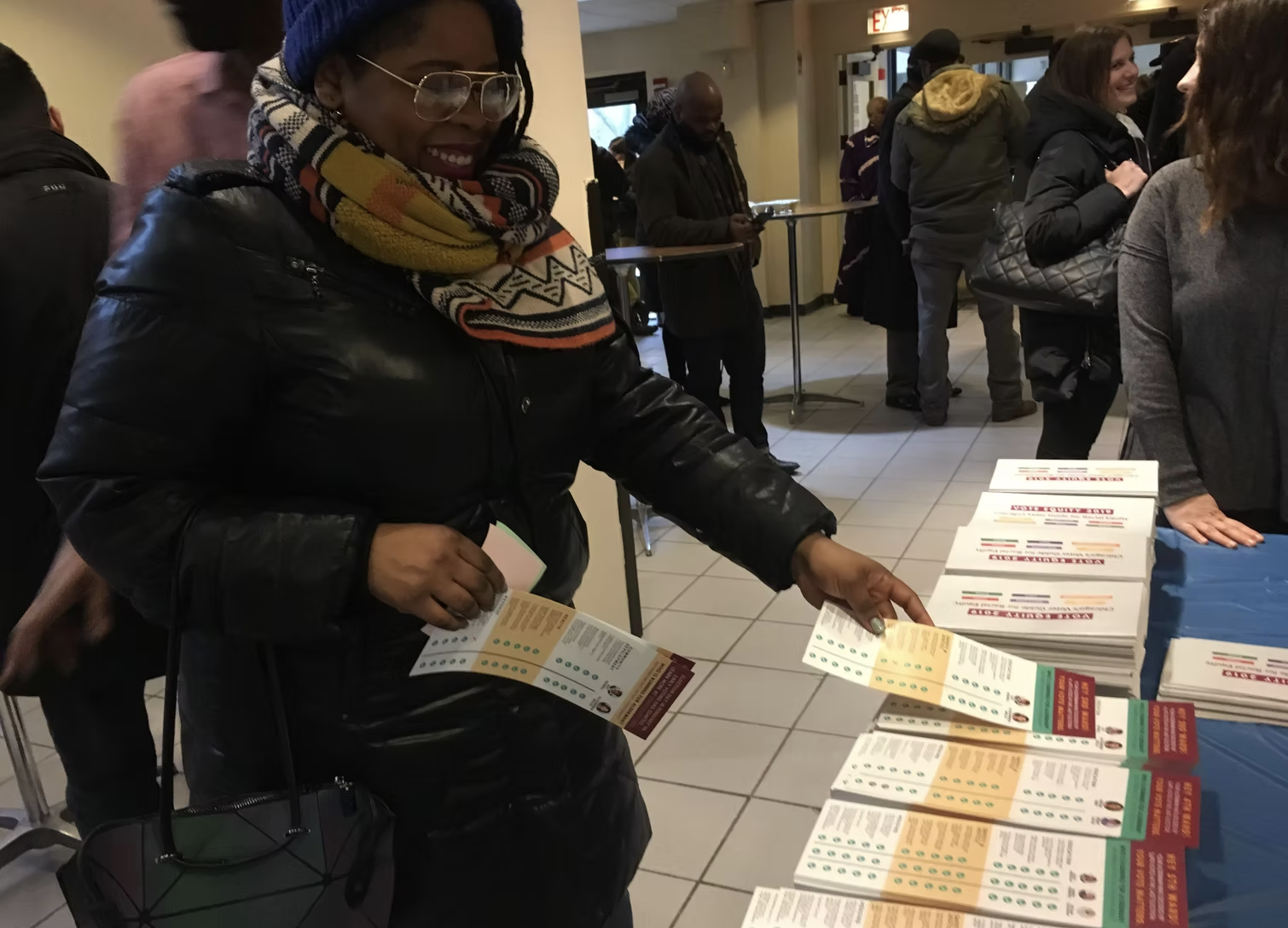


Top Row: Neighbors at a public library (left), digital voter guide (middle), and voters picking up paper voter guides (right). Middle Row: Partnering with local community groups to build a voter engagement bus (left), hosting neighborhood community voting (middle and right). Bottom: Voting parties at libraries and large public events.


Top Row: Building the Vote Equity guide through community voting at the MLK Day of Service event (left) and Sunday service (middle). Voter guides were distributed in paper copy at voter mobilization events, including candidate forums (right). Bottom left: Visual design to mobilize voters and a big-tent of partners (right) supported the project's outreach to varied networks.
This project was produced by a coalition of partners, anchored by Chicago United for Equity during Niketa Brar's leadership. Data methodology was led by Matt Sweeney at the Institute for Policy and Civic Engagement, who serves as a contributing adviser to For the Many Strategies.
Related Media:
 Natalie Y. Moore

 Ellie Mejía
 Niketa Brar

Ready to build a public agenda?
